

 English
 中文简体
中文简体


How Does the Manufacturing Process of Sized Non-woven Fabric Affect Fabric Performance?
Posted by Admin | 08 Jan
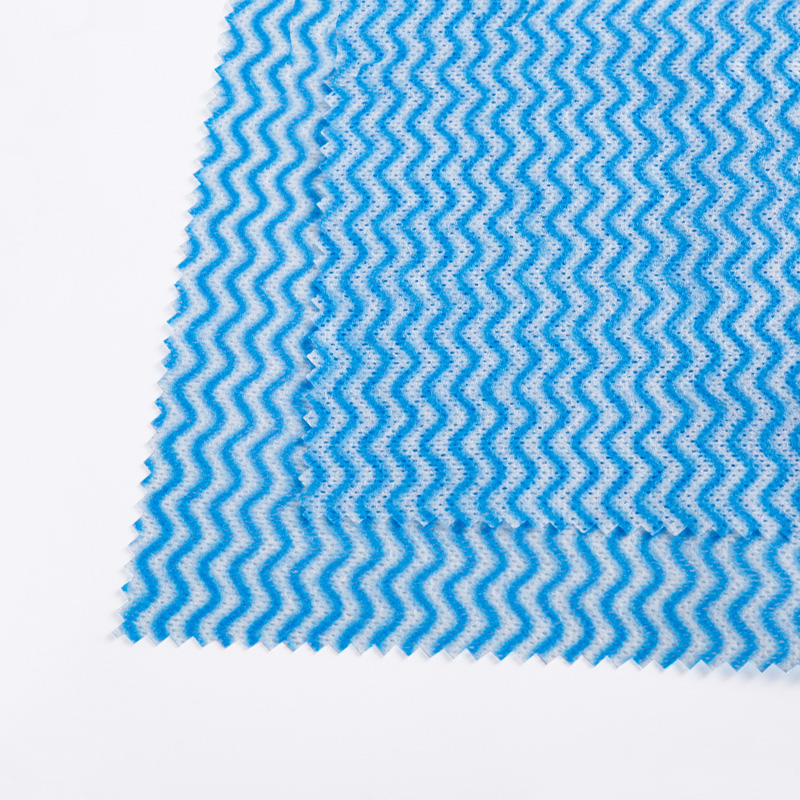
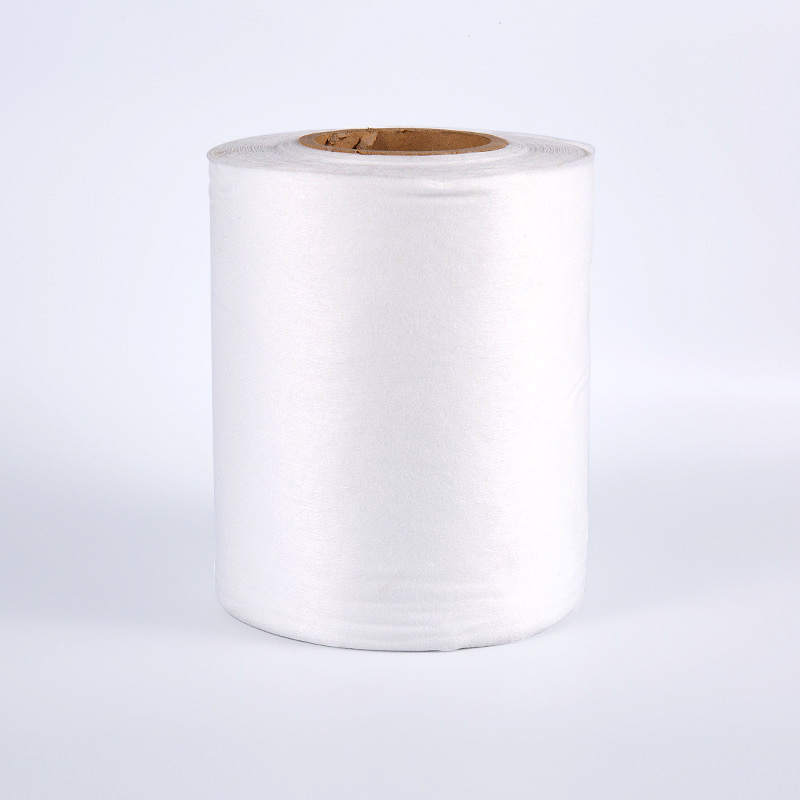
Sized non-woven fabric, as an important material in the modern textile industry, is widely used in packaging, home furnishings, medical applications, agriculture, and industrial filtration due to its unique processing technology and superior performance.
I. Definition and Characteristics of Sized Non-woven Fabric
Sized non-woven fabric refers to a non-woven fabric substrate that has a thin film or mesh-like protective layer formed on its surface through sizing treatment, thereby improving the strength, wear resistance, and tear resistance of the non-woven fabric. Compared with traditional non-woven fabrics, sizing treatment can significantly improve its physical properties, making it more stable during processing, transportation, and use.
Its core characteristics include good mechanical strength, moisture resistance, and dimensional stability. Furthermore, different sizing agents can impart functions such as waterproofing, oil resistance, flame retardancy, or antibacterial properties to the non-woven fabric. Because non-woven fabrics themselves have a loose fiber structure and are easily deformed, sizing treatment is an important means of improving their industrial adaptability and service life.
II. Analysis of the Sizing Process
The manufacturing process of sized non-woven fabric mainly includes four stages: coating, impregnation, drying, and shaping. During the coating and impregnation processes, a specially formulated sizing agent covers the fiber surface, strengthening the bonding force between the fibers. In the drying stage, the sizing agent solidifies and forms a protective film, giving the fabric surface uniformity and additional functions. Finally, after the shaping treatment, the dimensional stability and mechanical properties of the non-woven fabric are optimized.
The choice of sizing agent directly determines the final performance of the sized non-woven fabric. Depending on the application, synthetic resins, natural polymers, or functional additives can be used to specifically improve the tensile strength, tear resistance, and surface smoothness of the fabric. Precise process control not only ensures product quality but also enhances overall strength while maintaining a soft feel.
III. Performance Advantages
Sized non-woven fabric has significant performance advantages. First, its mechanical strength is greatly improved, making the fabric less prone to tearing during processing and use, suitable for carrying weight or for use in high-wear environments. Second, the surface flatness and wear resistance are improved, providing a reliable foundation for printing, coating, or subsequent processing. Furthermore, after functional sizing treatment, the fabric can possess properties such as water resistance, oil resistance, flame retardancy, or antibacterial properties, expanding its range of applications.
Meanwhile, sized nonwoven fabrics demonstrate excellent controllability during production and processing. By adjusting the slurry concentration, coating thickness, and drying process, different performance combinations can be achieved to meet customized needs. This high degree of adjustability makes it highly favored in specialized fields.
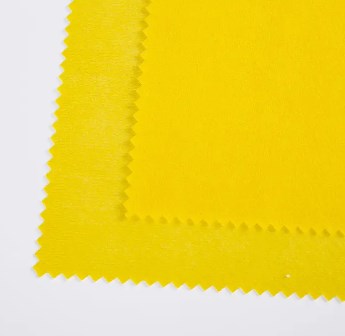
IV. Exploration of Application Areas
Sized nonwoven fabrics have an extremely wide range of applications, covering multiple industries. Their high strength, wear resistance, and customizable functions enable them to play an important role in household goods, industrial packaging, agricultural protective materials, and medical and healthcare products. In the home furnishings sector, the fabric is durable and easy to clean; in industrial applications, its tear resistance and wear resistance ensure transportation and packaging safety; in medical and hygiene products, its waterproof, breathable, and antibacterial functions significantly improve product performance.
Sized nonwoven fabrics also show potential in environmental protection materials, such as filter materials, protective fabrics, and composite functional fabrics. Their stable performance and convenient processing make them a new alternative to traditional fabrics.
Frequently Asked Questions (FAQ)
Q: What is the difference between sized nonwoven fabric and ordinary nonwoven fabric?
A: Sized nonwoven fabric is treated with sizing agents on the basis of ordinary nonwoven fabric, resulting in significantly enhanced mechanical strength, wear resistance, and functionality, making it suitable for more demanding applications.
Q: What are the main functions of sized nonwoven fabric?
A: Depending on the sizing agent, it can provide functions such as water resistance, oil resistance, flame retardancy, antibacterial properties, and tear resistance, while also improving the fabric's flatness and wear resistance.
Q: Is the production process of sized nonwoven fabric complex?
A: The process includes coating, impregnation, drying, and shaping. The key lies in the selection of sizing agents and the control of process parameters to ensure stable fabric performance and functionality.
Q: What application scenarios are suitable for sized nonwoven fabric?
A: It is widely used in household goods, industrial packaging, medical care, protective materials, and agricultural fabrics, especially suitable for applications requiring high-strength and functional fabrics.
Q: What is the future development direction of sized nonwoven fabric?
A: The future will focus on environmentally friendly, high-performance, multi-functional, and intelligent production, improving product adaptability and broadening its application scope.
+86-18857350038

