

 English
 中文简体
中文简体


What Are the Applications of Chemical Fiber Polyester Yarn in the Modern Textile Industry?
Posted by Admin | 15 Jan
Chemical fiber polyester yarn, as a widely used raw material in the textile industry, has gradually replaced natural fibers over the past few decades, becoming one of the most common textile products on the market. With technological advancements and optimized production processes, the application range of polyester yarn has continuously expanded, covering various fields from clothing to home furnishings and industrial fabrics.
What Are the Basic Properties and Characteristics of Polyester Yarn?
Polyester yarn is a textile fiber obtained through chemical synthesis with polyethylene terephthalate (PET) as the main component, possessing a series of unique physical and chemical properties. Firstly, polyester yarn has high strength and can withstand considerable tensile force, thus demonstrating significant advantages in applications requiring wear resistance and strength. Secondly, polyester yarn has good heat resistance and chemical corrosion resistance, maintaining stable performance in high-temperature and humid environments. In addition, polyester yarn has poor hygroscopicity, making it more comfortable to wear in dry environments and less susceptible to dampness and mildew.
How Is Polyester Yarn Produced?
The production process of polyester yarn mainly involves several key stages: spinning, stretching, and twisting. First, PET granules, the raw material for polyester, are heated and melted, then extruded through a spinneret to form filaments. After cooling and stretching, these filaments gradually form long, uniform fibers. Subsequently, these fibers undergo post-processing steps such as winding and twisting to finally produce yarn ready for market use.
Throughout the entire production process, quality control of polyester yarn is crucial. Precise control of parameters such as temperature, pressure, and speed during the spinning process effectively affects the quality of the yarn, while the control of the stretching process directly relates to the strength and elongation of the yarn. The dyeing process of polyester yarn is also very critical. Due to the poor hydrophilicity of polyester fibers, pre-treatment, such as pre-treatment or the use of dyeing auxiliaries, is usually required before dyeing to improve the fastness and uniformity of the dyeing.
What Are the Main Application Fields of Polyester Yarn?
Due to its unique performance characteristics, polyester yarn is widely used in various fields such as clothing, home furnishings, and industry. In the clothing sector, polyester yarn is widely used in the production of various types of fabrics, such as T-shirts, shirts, and jackets. Polyester fabric is particularly well-suited to the demands of modern fast-paced lifestyles due to its easy care, wrinkle resistance, and shrink resistance.
In the home furnishings sector, polyester yarn also has a wide range of applications. Whether for sofas, curtains, or bedding, polyester yarn provides high-strength, durable fabrics. In addition, polyester yarn is often used in home decor products such as carpets and mats because it resists everyday wear and tear and is easy to clean and maintain.
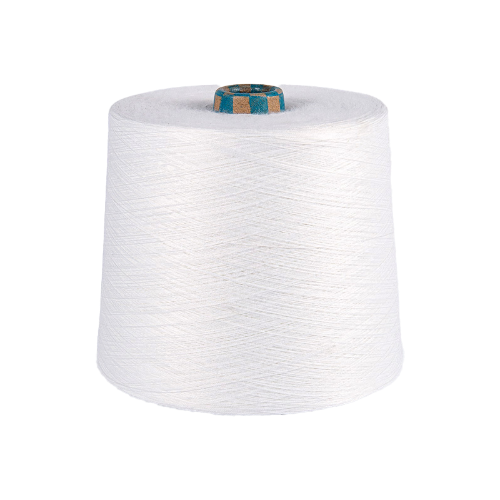
The industrial sector is another important area of application for polyester yarn. For example, polyester yarn is commonly used in the production of high-strength industrial fabrics, which can be used in protective, insulating, and filtering applications in the automotive, aerospace, and construction industries. Due to its anti-aging properties and high-temperature stability, it is also an ideal choice for making high-performance filter materials and industrial packaging bags.
What Are the Market Advantages of Polyester Yarn?
The market advantages of polyester yarn are evident in several aspects. Polyester yarn has relatively low production costs, enabling it to meet the needs of large-scale production, thus giving it a crucial position in the global textile industry. Polyester yarn also boasts superior performance characteristics, such as strong wrinkle resistance and durability, making it an ideal alternative to natural fibers. Compared to natural fibers, polyester yarn is less susceptible to environmental influences, has a longer lifespan, and is easy to maintain and care for.
With the increasing emphasis on environmental protection and sustainable development, the recycling of polyester yarn is gradually becoming a trend in the industry. Many textile companies are exploring the recycling and reuse of discarded polyester yarn, reprocessing it into new textile products through modern recycling technologies. This not only significantly reduces resource waste but also aligns with the requirements of green production and the circular economy.
Frequently Asked Questions (FAQ)
1. What Are the Differences Between Polyester Yarn and Other Yarns?
Compared to natural fibers such as cotton and linen, polyester yarn has higher strength, lower moisture absorption, and greater durability. Compared to other synthetic fibers, polyester yarn has lower production costs and is less prone to deformation and fading.
2. Is Polyester Yarn Easy to Dye?
Due to the poor hydrophilicity of polyester fibers, special dyeing processes are required for dyeing. However, with optimized dyeing techniques, polyester yarn can achieve good dyeing results with long-lasting colors.
3. Is Polyester Yarn Environmentally Friendly?
Polyester yarn, as a synthetic fiber, is relatively durable and has a long lifespan, which reduces resource waste caused by frequent clothing replacement. Recycling technology for polyester yarn is constantly improving, and more and more discarded polyester yarn can be recycled and reused, reducing the environmental burden.
4. What Types of Clothing Are Suitable for Polyester Yarn?
Polyester yarn is commonly used in the manufacture of clothing such as T-shirts, shirts, and jackets, and is especially suitable for everyday wear and outdoor sportswear. Due to its durability and wrinkle resistance, clothing made from polyester yarn is well-suited to a fast-paced lifestyle.
5. How Should Polyester Yarn Clothing Be Cared For?
Polyester yarn clothing is easy to clean and maintain, but high-temperature washing should be avoided. It is recommended to wash with cold or warm water to maintain the color and shape of the garment.
+86-18857350038

